For most Malaysian families, the car carries us through daily life, from the morning commute and school run to the long balik kampung drive. Thinking about safety means thinking about the people sharing those journeys — and how the car helps protect them.
Keeping those journeys safe is a shared responsibility, from how we drive to the roads we use and the vehicles we choose. Understanding what a car’s safety systems can—and cannot—do is part of making an informed choice.
When shopping for a car, we often judge safety by what we can count: airbags, driver-assistance features or a star rating. These matter, but so does something less visible: how the body of the car is built.
Active and passive safety: Complementary roles
In recent years, the safety conversation has shifted towards crash prevention. Advanced driver-assistance systems (ADAS), such as autonomous emergency braking and lane-keeping assist, were once reserved for premium models. Today, they are increasingly available across a wide range of vehicles.
These technologies support the driver in specific situations, within defined operating limits. If a collision occurs, the body structure, seatbelts, airbags and head restraints have a different job: working together to manage crash forces and help reduce the risk of injury to the people inside.
The structure helps preserve cabin space, while seatbelts and airbags restrain and cushion occupants. Their effectiveness depends on the collision’s type and severity, correct seatbelt use and occupant position.
Much of this protection starts with choices we cannot see from the driver’s seat: the materials beneath the bodywork and how consistently they are formed and joined.
Why materials and manufacturing matter
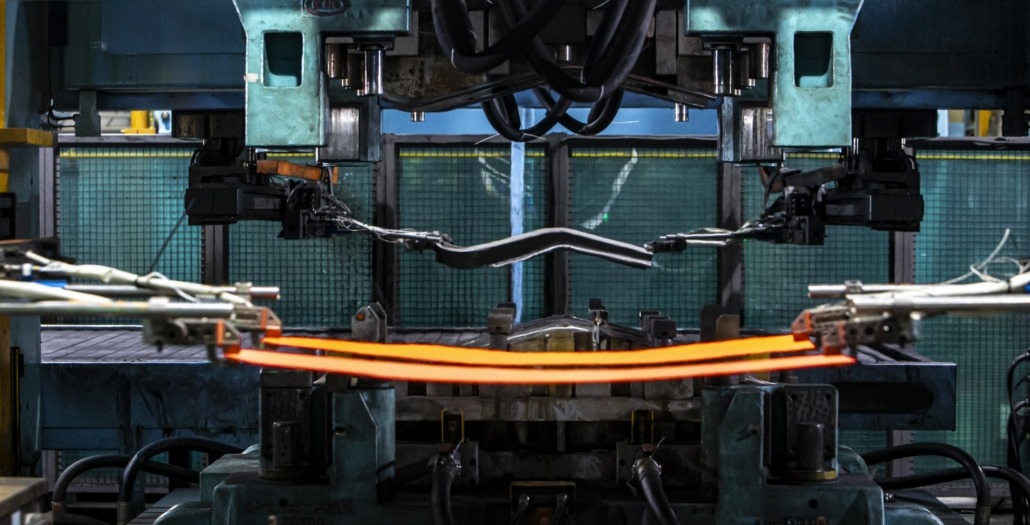
High-strength hot-stamped components for Hyundai vehicles at Hyundai Steel’s Yesan plant.
To help protect the people inside, some parts of the car deform in a controlled way to absorb impact energy; others are reinforced to preserve cabin space. Different steel grades and thicknesses serve these roles, with ultra-high-strength and hot-stamped steel typically concentrated in the centre pillars, side sills and roof rails. Within Hyundai Motor Group, Hyundai Steel, the Group’s steelmaking affiliate, develops grades with Hyundai’s vehicle engineers to meet these structural needs.
How steel is formed and joined matters, too. Tailor-welded blanks (TWB) combine laser-welded sheets of different grades and thicknesses before forming, making components stronger where crash forces concentrate and lighter elsewhere. Hot stamping heats steel above 900°C, then presses and rapidly cools it, producing high-strength parts for selected structural areas. Used selectively, these processes reinforce the passenger compartment without unnecessary weight. Material strength alone does not determine occupant protection; how the structure and restraint systems work together also matters.
Understanding crash forces through testing
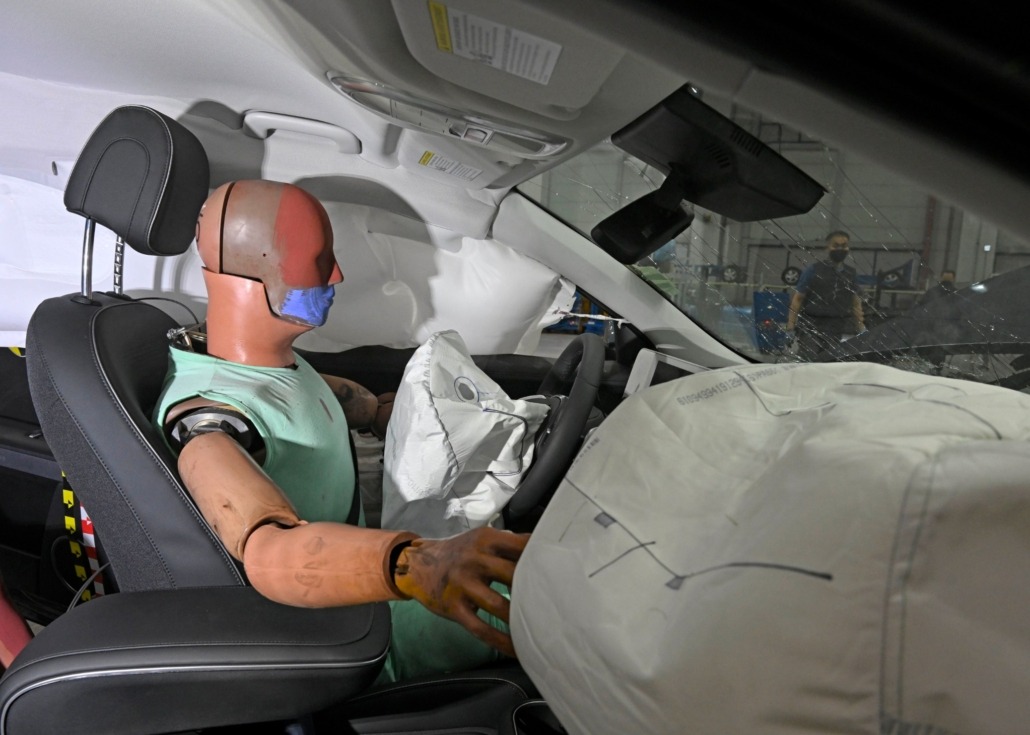
THOR crash dummies help engineers assess how occupants may respond to crash forces.
Crash testing helps engineers understand how a vehicle protects its occupants before it reaches the showroom. Hyundai’s Namyang R&D Centre in South Korea is one facility where this testing takes place.
Hyundai uses crash dummies including the THOR dummy, fitted with 157 sensors, designed to closely resemble a real human. Their measurements help engineers assess how crash forces may affect occupants and improve structures and restraint systems, with one practical aim: reducing the risk of injury to the people inside.
From engineering principle to production vehicle
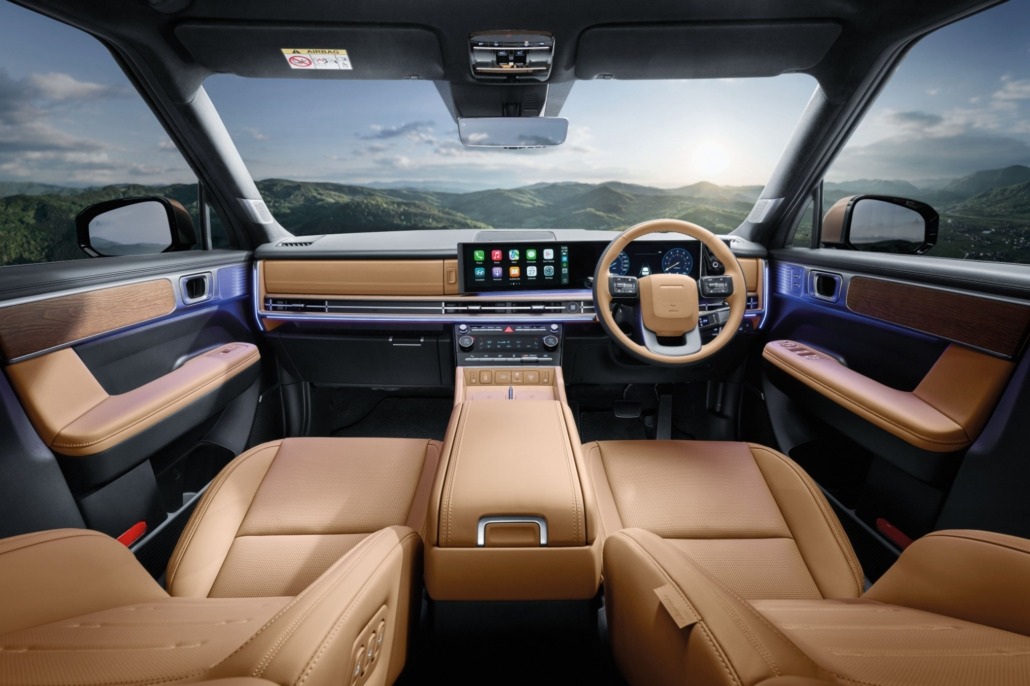
The SANTA FE’s passenger cabin – where body structure and restraint systems work together to help protect the people inside in a collision.
The Hyundai SANTA FE illustrates how these principles help manage crash forces and preserve passenger space. Its body uses third-generation steel combining higher strength with formability, while hot stamping has increased from 13.2% in the previous model to 15.3%. Together, these changes raise average body tensile strength by 4.5%, from 67 to 70 kgf/mm². Selected areas combine 150K-grade tailor-welded blanks with hot stamping.
To help preserve space for the driver and passengers in a frontal impact, the SANTA FE’s subframe distributes crash forces across the structure, its multi-skeletal engine room helps dissipate impact energy, and an aluminium bumper beam contributes to impact absorption without unnecessary weight.
In a side impact, less space separates the collision from the person nearest the door. To help preserve that space, the SANTA FE uses reinforced seat cross-members, an intermediate reinforcement, an additional bulkhead and thicker hot-stamped pillar sections.
Independent assessments provide another reference point. The SANTA FE received an IIHS TOP SAFETY PICK+ 2026 award, while the model achieved a five-star ANCAP rating in 2024. Safety ratings should always be considered in relation to the model year, market specification and test protocol assessed.
What buyers should look for
At the showroom, start with the people who travel with you. These checks can help you look beyond the equipment list and understand the protection offered by the exact version you are considering:
- Check your family’s needs: Confirm that seatbelts and head restraints can be adjusted appropriately for regular occupants, and that any child restraint can be installed correctly according to the vehicle and restraint manufacturers’ instructions.
- Check published crash-test results: Look up the model’s results from independent assessment bodies and review its performance in individual categories, not only the overall star rating.
- Confirm what the rating covers: Ratings can differ by model year, variant and market. Check whether the result applies to the specification sold locally.
- Check the exact variant: Safety equipment may differ within the same model range. Confirm which airbags, driver-assistance technologies and other safety systems are included in the vehicle being considered.
- Understand system limitations: Ask for a demonstration of relevant driver-assistance functions and review the owner’s manual to understand what each system does, when it operates and where its limitations apply.
- Maintain the complete safety system: Follow the recommended maintenance schedule and address safety-related warning lights or damaged components promptly.
Safety is not defined by one feature, material or test result. It depends on how a car’s structure, restraints and driver-support technologies work together, alongside consistent manufacturing, proper maintenance and responsible road use. Whether for the school run or a journey home, the question is the same: how is this car designed to help protect the people travelling in it?
Check Out Our Instagram Feed


Check Out Our Facebook Feed

KTM Malaysia launched the 990 RC R & 1390 Adventure range. # KTM #ktmmalaysia #ktm990rcr #ktm1390adventure
Zeekr Carro opens a new service center today at Bandar Sri Damansara. Zeekr existing and potential owners now have an additional center to get your ride taken care of. Drop by and check it out. #ZeekrMalaysia #Zeekr #ZeekrCarro #motorBugs #zeekrservicecentermalaysia